🔎
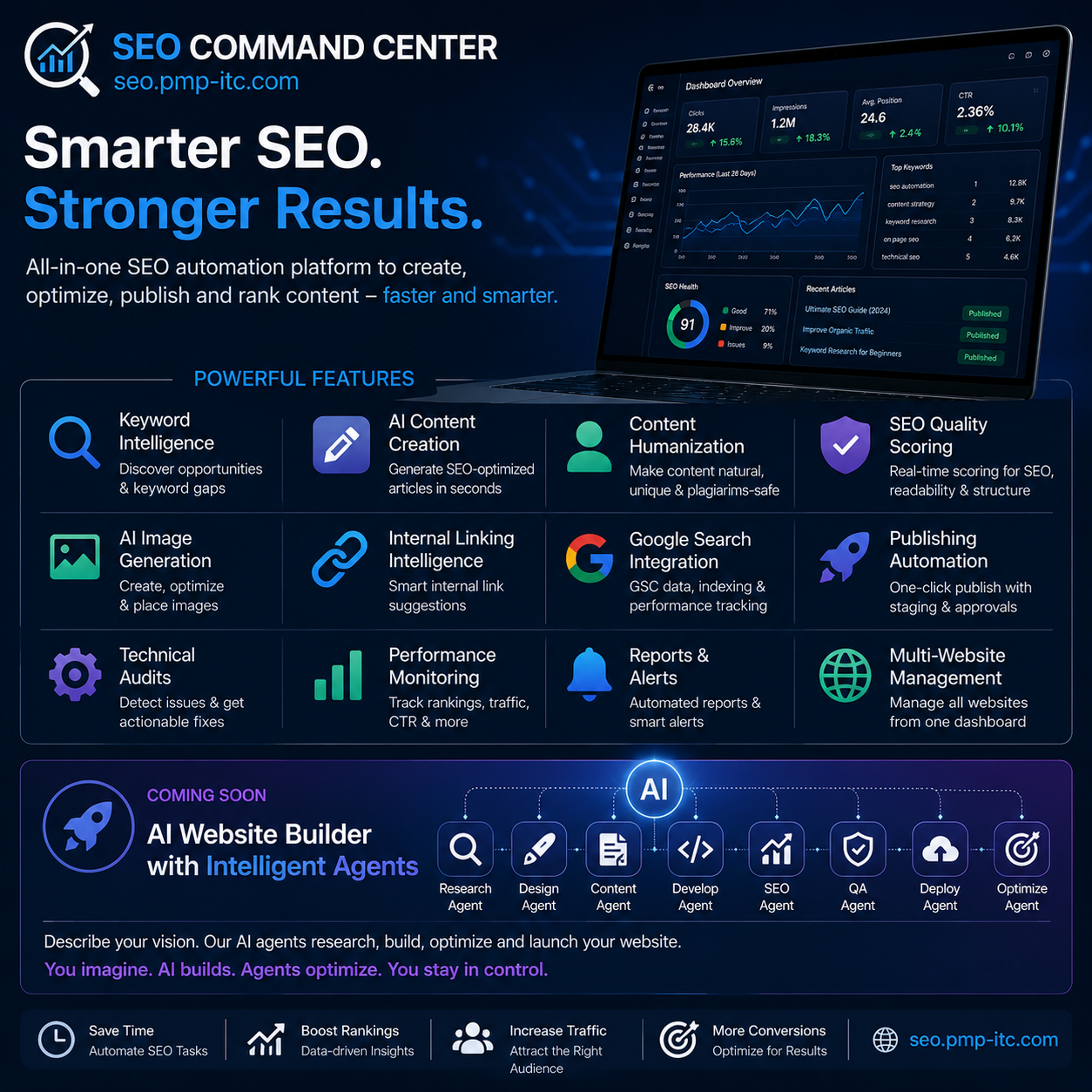
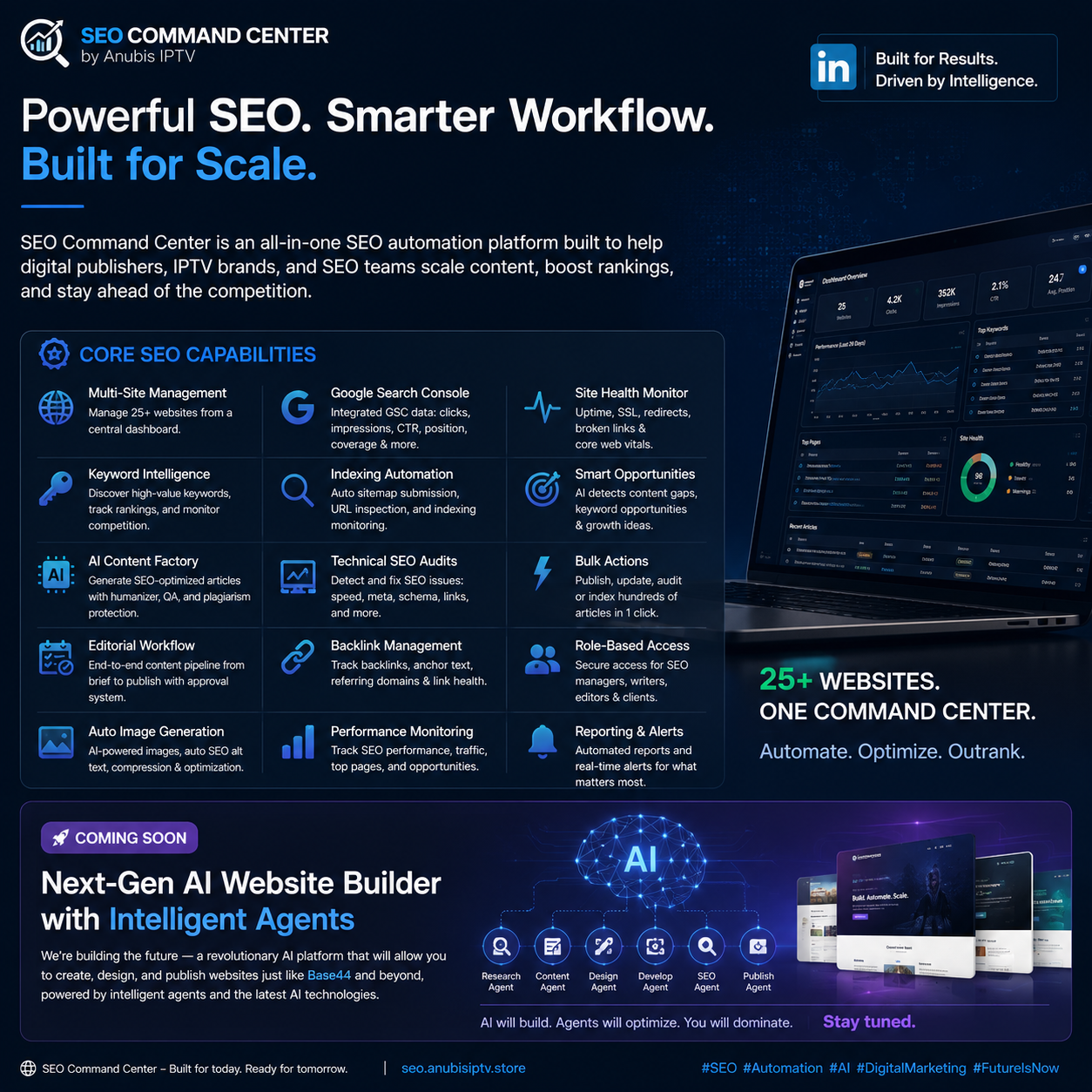
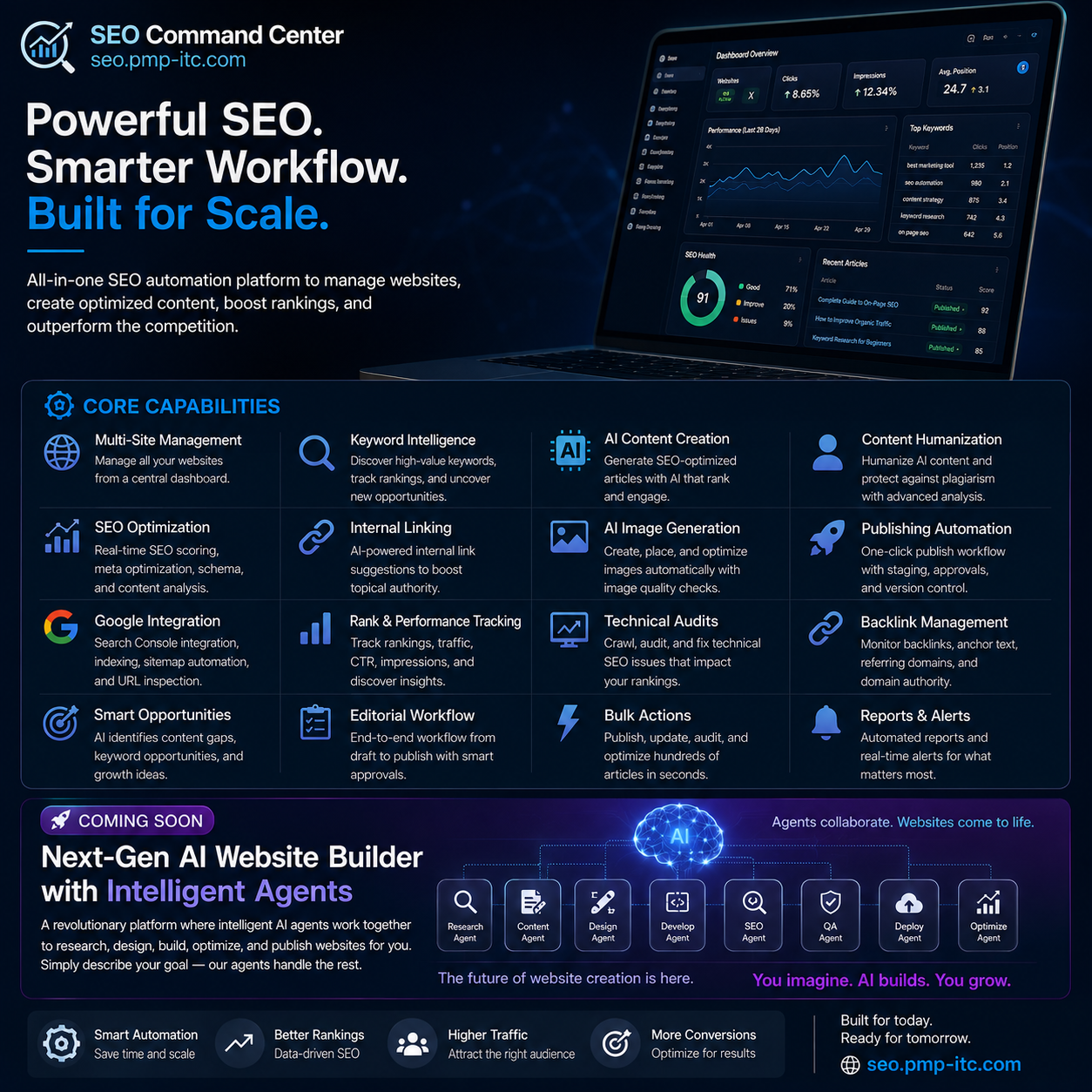
Keyword IntelligenceDiscover, score, prioritize, cluster and safely assign keywords across the portfolio.
🧭
Site + URL RoutingResolve the best website, canonical target page, support page or new content path.
📊
Trusted Keyword MetricsUse Google Ads, GSC and verified imports for volume, CPC, competition, CTR and position.
🌍
Niche · Country · LanguageConfigure market context so scoring and discovery reflect the intended audience.
🧠
AI + Non-AI ModesUse deterministic rules when evidence is stronger and AI for semantic verification or discovery.
🧩
Cannibalization ProtectionPrevent overlapping pages and domains from competing for the same search intent.
✍️
Content IntelligenceTurn keyword gaps into briefs, articles, refresh plans and structured editorial work.
🎨
Image WorkflowGenerate, reuse, version, optimize and safely attach article imagery.
🔗
Internal LinkingFind relevant support pages, validate internal links and reinforce canonical target pages.
✅
SEO Quality GatesSEO, readability, image, plagiarism, link and preflight checks before publishing.
🚀
Publishing OrchestratorPrepare, approve, stage, publish, verify, reconcile, overwrite and recover at scale.
📈
Google Search ConsoleUse real clicks, impressions, CTR, ranking, query and page evidence in decisions.
🗺️
Indexing CenterCoordinate sitemap submission, URL inspection, monitoring and post-publish Google workflows.
⚡
PageSpeed + LighthouseBulk performance, accessibility, best-practice and SEO checks without AI.
🩺
Technical SEOMonitor crawlability, indexing, canonicals, redirects, links and site health.
🎯
Opportunity DiscoverySurface missing clusters, weak paths, refresh candidates and commercial gaps.
🏢
Multi-Site GovernanceManage portfolio, tenant, website and user scope from one command center.
🧩
RBAC + ApprovalProtect actions with role-based access, tenant isolation, approvals and auditability.
🔔
Reports + AlertsTurn operational states into visible reporting, exceptions and attention-required workflows.
💰
Cost GovernancePrefer free APIs, deterministic scoring and reuse before paid AI actions.